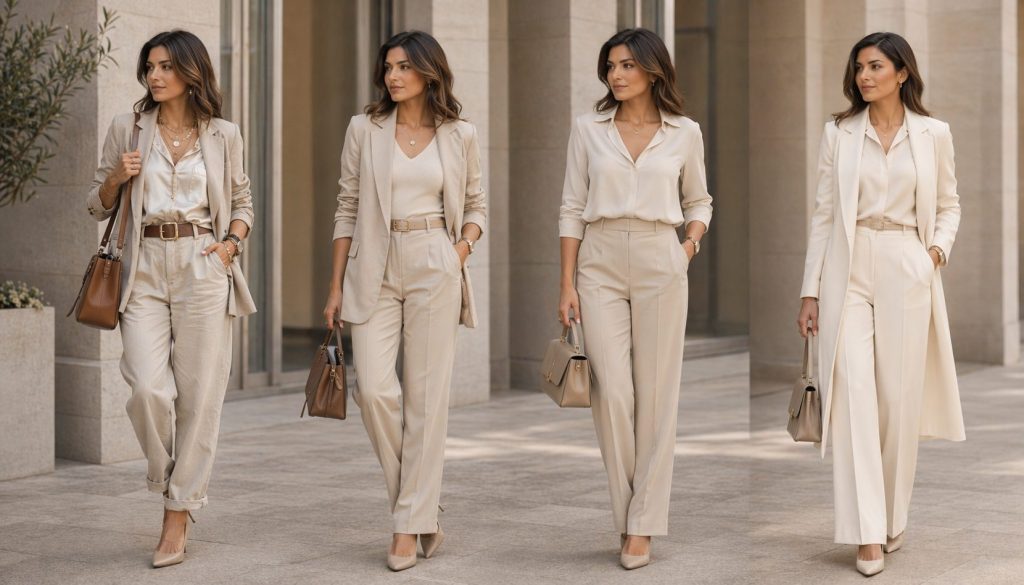

Some outfits instantly look expensive. Others never quite get there, no matter how much is spent.
The difference is rarely the clothes themselves. It is how they are worn. The way pieces sit, the way colors interact, and the way everything is edited before you walk out the door quietly determines the outcome.
Once you understand that, your wardrobe starts to shift without actually changing. Pieces you already own begin to feel sharper, more intentional, and far more put together.
This is where style becomes less about adding and more about refining.
The Difference You Can See but Cannot Always Explain

You have seen it countless times. Two women wearing nearly identical outfits, yet one looks elevated and the other feels slightly off. That gap lives in the details most people overlook.
When too many elements compete, the outfit loses direction. When everything feels controlled, it feels composed. That sense of balance is what creates a polished look.
This is the core of why some outfits look expensive. It is not about bold choices. It is about clarity.
Visual Calm Always Reads Better
An outfit that feels calm almost always reads as more elevated. Not plain, not minimal for the sake of it, but controlled.
Your eye should be able to move across the outfit without stopping at every single detail. That is what creates a sense of ease, and that ease is what people associate with expensive style.
Too much happening at once usually works against you. Strong style is rarely loud. It is precise.
Where Style Starts to Feel Effortless

There is a point where getting dressed stops feeling like effort. That is where elevated style begins.
Clean silhouettes, thoughtful proportions, and intentional simplicity often create more impact than complex styling. A structured blazer with straight-leg trousers and a sleek shoe will almost always outperform a layered, trend-heavy outfit.
This is why simple outfits look more expensive. They feel resolved, not busy.
Less Really Does More
Too much styling is one of the fastest ways to make an outfit look cheaper. It creates noise where there should be clarity.
One strong piece supported by clean basics carries far more impact than multiple competing details. When you remove excess, the outfit becomes easier to read, and that readability feels elevated.
Editing is where style actually happens.
Your Closet Already Has What It Needs

Most people do not need better clothes. They need better use of the clothes they already have.
A basic outfit can shift dramatically with small adjustments. A loose shirt becomes structured with a tuck. A casual outfit becomes polished with the right shoe. A soft, slouchy bag can bring everything down, while a structured one sharpens the entire look.
This is where everyday outfits start to look more polished without buying anything new.
Small Shifts That Change Everything
- Tuck or half-tuck a shirt to define your waist and clean up proportions
- Roll sleeves slightly to create a lighter, more intentional line
- Swap overly casual shoes for something structured or minimal
- Choose bags that hold their shape instead of collapsing
- Smooth or steam fabric before wearing it
These are small details, but they completely change how the outfit is perceived.
Color That Feels Controlled, Not Loud

Color can either elevate an outfit or disrupt it entirely. The difference comes down to control.
When too many tones compete, the outfit feels scattered. When the palette is controlled, everything feels cohesive. Neutral tones naturally create this effect.
This is why neutral outfits look more expensive. They allow the eye to settle instead of jumping from one element to another.
Let One Color Lead
If you introduce color, let it be intentional. One strong color choice can elevate a look. Several competing colors often dilute it.
A deep burgundy heel with an otherwise neutral outfit feels refined. Multiple bold colors layered together rarely achieve the same effect.
Clarity always wins over complexity.
The Quiet Strength of Monochrome

Monochrome dressing creates a seamless, uninterrupted line that instantly feels more polished. It also elongates the body, which adds to the refined effect.
The key is variation within the color. Different textures and subtle tone shifts keep the outfit interesting without adding visual clutter.
This is where monochrome outfits feel effortless. Everything connects naturally.
Texture Creates Depth
Without texture, monochrome can feel flat. With it, the outfit gains dimension.
A soft knit paired with structured trousers and smooth leather creates contrast within the same color story. That contrast adds richness without disrupting the look.
This is how monochrome stays elevated instead of basic.
Fit Changes Everything Before Anything Else

If the fit is off, nothing else can fix it.
Clothing that sits correctly creates clean lines and balance. Clothing that pulls, sags, or bunches breaks the entire look, no matter how good the pieces are.
This is why affordable clothes can still look expensive. Fit carries more visual weight than price.
The Cut Matters More Than the Brand
A perfectly fitting blazer will always look better than an expensive one that does not sit right. The same applies to trousers, denim, and even basic tops.
Small adjustments can make a major difference. A slight hem, a better waist fit, or cleaner proportions can transform an entire outfit.
Fit is where refinement begins.
Fabric Speaks Before You Do

Before anyone processes your outfit fully, they notice how it moves. Fabric plays a major role in that first impression.
Materials that drape cleanly and hold their structure tend to look more elevated. Thin, overly shiny, or clingy fabrics often do the opposite.
This is one of the quiet reasons certain outfits feel expensive immediately.
What Tends to Look More Elevated
- Mid-weight cotton with structure
- Denim that holds its shape
- Matte finishes instead of high shine
- Knitwear that maintains its form
The goal is not luxury. It is control in how the fabric behaves.
Accessories That Know Their Place

Accessories can elevate an outfit instantly, but they can also overwhelm it just as quickly.
A structured bag, simple jewelry, or a clean pair of sunglasses can bring everything together. Too many statement pieces can clutter the look and remove its focus.
This is where accessorizing to look more expensive becomes about restraint.
Pick One Focal Point
Let one element lead. If the bag stands out, let it carry the look. If the jewelry is bold, keep everything else quiet.
When everything tries to stand out, nothing does.
Blending High and Low Without the Contrast Showing
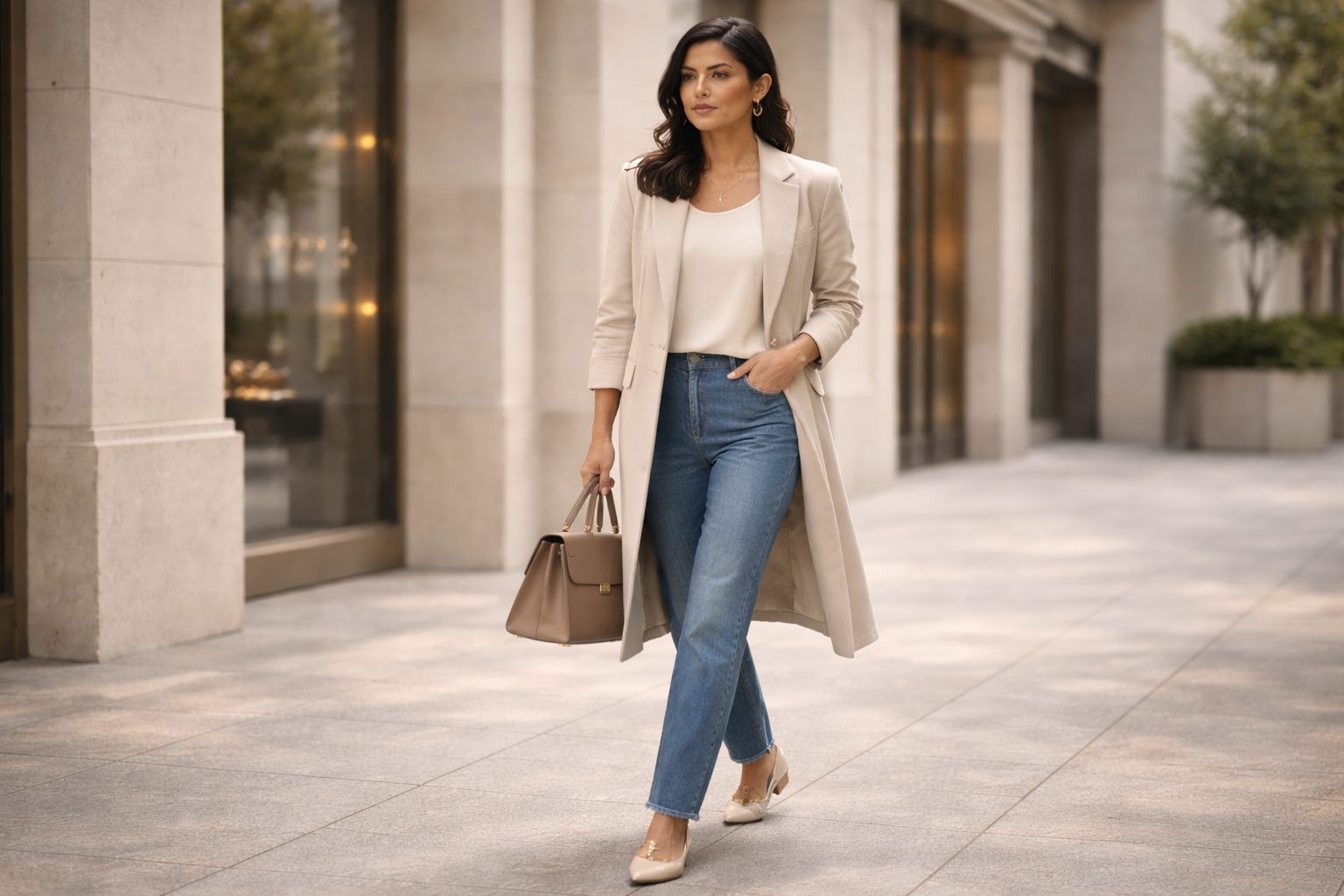
Mixing different price points can create stronger outfits when done correctly. The key is cohesion.
If one piece feels disconnected, it disrupts the entire look. When everything feels aligned, the outfit looks intentional.
This is how high-low styling looks seamless.
Where It Matters Most
Shoes, bags, outerwear, and trousers shape the overall impression quickly. When those feel polished, the rest of the outfit follows.
Basics can be simpler, as long as they fit well and hold their shape.
Polished vs Overdone

More is rarely better. More is often what weakens an outfit.
An outfit that feels edited will always look stronger than one that feels overloaded. Removing one unnecessary detail can instantly improve the entire look.
This is where refinement shows.
Editing Is the Final Step
Before leaving, take a moment to look at your outfit. If something feels like too much, it probably is.
The strongest looks are usually the most controlled.
The Details People Notice Without Realizing It

Small details shape how your outfit is perceived, even if they are not consciously noticed.
- Wrinkled fabric lowers the entire look
- Worn shoes break the polish
- Poor fit disrupts clean lines
- Mismatched accessories distract
These are the quiet signals behind what makes an outfit look put together.
Presentation Matters
Clean shoes, smooth fabric, and simple grooming complete the look. These details are subtle, but they define the final impression.
Building a Wardrobe That Works Together

A strong wardrobe is not about quantity. It is about cohesion.
When pieces share a similar tone, structure, and overall feel, creating outfits becomes easier and more consistent.
This is where building outfits from basics becomes powerful.
Consistency Creates Polish
When your wardrobe has direction, your outfits feel more intentional without extra effort.
What Pulls an Outfit Down Without You Realizing

Even strong pieces can fall flat when certain details are overlooked.
- Too many bold elements competing
- Poor fit
- Weak fabric
- Over-accessorizing
Most of the time, the issue is not the clothing. It is how it is styled.
It Is Fixable
That is the advantage. These are all things you can adjust immediately.
The Shift That Changes Everything

Looking expensive is not about doing more. It is about doing less, with intention.
When you focus on fit, fabric, color, and restraint, your outfits begin to feel more refined without needing to change your entire wardrobe.
That shift is what people notice.
A Style Watch That Reinforces Everything
If this piece clicked for you, this is a strong next step. It stays in the same lane by showing how to look more expensive with the clothes you already own, just in a more visual way.
Recommended watch: How to Look Expensive With the Clothes You Already Own