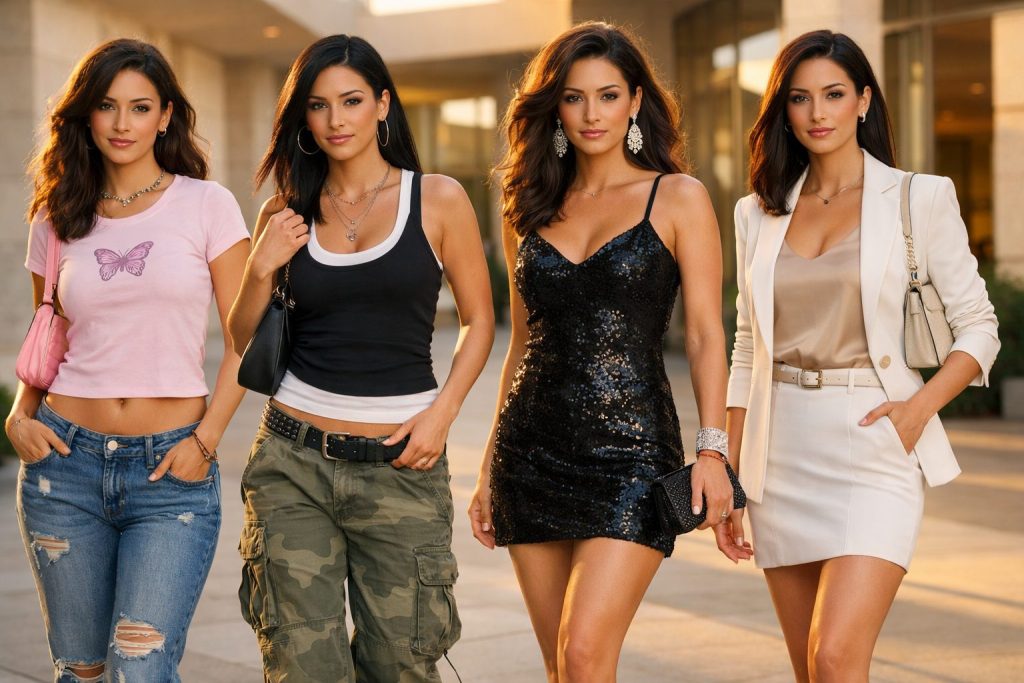

The 2000s did not follow a single path, and that is exactly what made the decade so visually distinct. Women were blending influences, experimenting with proportions, and building outfits that felt expressive rather than controlled. Style was shaped by culture, media, and a growing sense of individuality that showed up in everyday looks. Nothing felt overly polished, yet everything felt intentional in its own way. That balance between effort and ease is what made the era stand out.
Outfits moved easily between casual and statement without feeling disconnected. A simple look could be transformed through layering, accessories, or a shift in silhouette. Women were not dressing to fit into one category, they were creating looks that reflected their mood, environment, and influences. This made fashion feel more personal and less restricted by rules. It was a time where style felt alive, constantly shifting, and full of possibility.
What Defined 2000s Women’s Fashion Overall
The 2000s women’s fashion trends list tells a story of contrast, confidence, and constant reinvention. Women were not dressing for one aesthetic, they were mixing influences in a way that felt personal and expressive. Outfits could be polished one day and intentionally chaotic the next, without losing a sense of identity. This era embraced experimentation in a way that felt bold rather than forced. That freedom is what made the decade so visually unforgettable.
If you look at what women wore in the 2000s fashion scene, you will notice how quickly trends shifted and overlapped. Low-rise silhouettes sat next to tailored pieces, while casual basics were elevated with statement details. Nothing felt overly coordinated, yet everything still worked together in a distinct way. The focus was less on perfection and more on creating a look that felt current and attention-grabbing. It was fashion that invited risk without overthinking.
Among the popular 2000s clothing styles for women, there was a strong mix of casual and glam influences happening at the same time. Women moved easily between relaxed daytime outfits and more dramatic evening looks without changing their core wardrobe too much. This fluidity made fashion feel accessible while still allowing for individuality. Pieces were often styled in multiple ways, giving them more impact than they might have had on their own. The result was a wardrobe that felt both versatile and expressive.
The evolution of 2000s women’s fashion decade also reflected changes in culture, media, and technology. As celebrity culture and early social platforms grew, trends spread faster and reached wider audiences than ever before. Women were inspired not just by designers, but by music videos, red carpets, and everyday street style. This created a layered fashion environment where high and low influences blended seamlessly. It marked a shift toward fashion being shaped by real-time visibility rather than slow seasonal cycles.
When comparing how 2000s fashion differed from 90s women style, the shift becomes even more clear. The minimalism of the late 90s gave way to more playful, body-conscious, and detail-heavy looks. Outfits became more styled, more intentional, and often more revealing. There was a stronger focus on creating a complete look rather than relying on simplicity alone. That shift laid the groundwork for how women approach personal style today, where individuality leads and rules come second.
Early 2000s Fashion and the Y2K Aesthetic
The rise of early 2000s outfits for women explained a new kind of fashion energy that felt futuristic, playful, and slightly rebellious. The Y2K aesthetic pulled inspiration from technology, pop culture, and a growing obsession with celebrity lifestyle. Clothing leaned toward body-conscious fits, glossy finishes, and pieces that felt intentionally eye-catching. Women were experimenting with silhouettes that highlighted the waist, hips, and overall shape in a confident way. It was less about blending in and more about being seen.
A closer look at the y2k fashion trends for women breakdown reveals just how specific the styling choices were during this time. Fabrics often had a slight sheen, colors ranged from soft pastels to bold metallics, and outfits were rarely left plain. Even simple looks were styled with intention, often including layered tops, exposed midriffs, or unexpected accessories. There was a playful balance between casual and statement-making pieces. This mix created outfits that felt expressive without needing to be overly complicated.
The visual identity of the era is also clear through 2000s fashion aesthetics women explained in real-life styling. Outfits were built around contrast, combining soft and edgy elements within the same look. Feminine details like fitted tees and mini skirts were paired with chunkier shoes or oversized layers. This contrast made outfits feel dynamic rather than predictable. It allowed women to experiment with different sides of their personal style all at once.
When looking at 2000s fashion colors and patterns women embraced, the palette was anything but quiet. Bright pinks, baby blues, metallic silvers, and glossy blacks were all part of the mix. Patterns included everything from playful graphics to subtle textures that added depth without overwhelming the outfit. Color was used to draw attention and create mood rather than simply coordinate pieces. This made even simple outfits feel more styled and intentional.
In terms of everyday outfits in 2000s women’s fashion, the styling still carried that same Y2K influence. A casual outfit was rarely just a basic top and jeans without added detail. Women layered tanks, added belts, or chose fitted silhouettes that created shape and structure. Even off-duty looks felt curated in a way that reflected the trends of the time. That attention to detail is part of why the early 2000s aesthetic continues to resonate today.
Iconic 2000s Clothing Pieces Every Woman Wore
The heart of the decade lives in the iconic 2000s fashion pieces for women that defined everyday style. These were not just trends, they were staples that showed up everywhere from school hallways to red carpets. Each piece carried a distinct attitude, often designed to highlight shape, confidence, and individuality. Women built entire outfits around a few standout items that instantly signaled the era. That is why these pieces remain so recognizable even today.
One of the most defining items was low rise jeans 2000s fashion women could not get enough of. Sitting well below the waist, they created a completely different silhouette compared to previous decades. They were often styled with cropped tops or fitted tees, making the midsection part of the overall look. This pairing became one of the most recognizable combinations of the early 2000s. It was bold, unapologetic, and everywhere.
Another standout was the rise of baby tees 2000s women fashion trend that felt playful yet styled. These cropped, fitted tops often featured graphics, logos, or simple text across the chest. They were easy to pair with denim, mini skirts, or even layered over tanks for added dimension. The appeal came from how effortless they looked while still feeling put together. It was a small piece that made a big impact on an outfit.
Alongside these, cargo pants 2000s women style outfits brought a more relaxed, utilitarian edge into mainstream fashion. With multiple pockets and a looser fit, they contrasted sharply with more fitted pieces. Women often styled them with tighter tops to balance proportions and create shape. This mix of structured and relaxed elements became a signature styling move of the decade. It showed how versatility played a major role in outfit building.
No conversation about the era would be complete without mini skirts 2000s fashion women looks that leaned into bold, confident styling. These skirts were often paired with boots, heels, or casual flats depending on the occasion. Fabrics ranged from denim to satin, allowing the same silhouette to work across different settings. The shorter length added a sense of playfulness while still feeling intentional. Together, these pieces created a wardrobe that felt expressive, recognizable, and completely tied to the energy of the 2000s.
Tops, Layering, and Outfit Building Trends
The foundation of many outfits came down to 2000s tops women used to wear, which were rarely styled on their own. Tops were fitted, cropped, or slightly stretched to hug the body and create shape. Even the simplest pieces were chosen with intention, often acting as the starting point for the entire look. Women paid close attention to how a top sat on the body, especially when paired with low-rise bottoms. This made tops one of the most important elements in defining the overall silhouette.
One of the most recognizable styling techniques was layering trends in 2000s women’s fashion, which added depth without making outfits feel heavy. Tanks were stacked, camis were worn under tees, and contrasting straps were often left visible on purpose. This approach created dimension while still keeping the outfit casual and wearable. It also allowed women to mix colors and textures in a way that felt effortless. Layering was not about warmth, it was about visual interest.
Graphic pieces played a huge role, especially with graphic tees 2000s women fashion becoming a go-to staple. These tees often featured logos, slogans, or playful designs that added personality to an outfit. They could be styled casually with jeans or dressed up slightly with skirts and accessories. The key was how they were fitted and paired rather than the graphic alone. This made them versatile while still feeling expressive.
Another defining detail was the rise of 2000s layered tank tops women trend, which pushed layering even further. Multiple tanks in different colors were worn together, often with contrasting straps peeking through. This created a stacked, slightly undone look that still felt intentional. It was a simple way to make an outfit feel more styled without adding complexity. The effect was casual but visually distinct.
To bring everything together, 2000s belt trends women fashion added structure and emphasis to outfits. Belts were not just functional, they were often used as statement pieces worn low on the hips or over tops. They helped break up layers and define proportions, especially with longer tops or multiple pieces. This final touch made outfits feel complete and styled rather than thrown together. It showed how even small details played a major role in 2000s fashion.
Denim Trends That Dominated the 2000s
Few things defined the decade more clearly than denim trends in 2000s women’s fashion, which shaped everyday style across nearly every setting. Denim was not limited to jeans, it showed up in skirts, jackets, and even full matching sets. Women relied on it as a foundation piece that could be styled up or down depending on the occasion. The fits, washes, and cuts varied widely, giving denim a level of versatility that made it central to the era. It was less about having one perfect pair and more about having multiple options that created different looks.
At the center of it all were low rise jeans 2000s fashion women wore as a staple. These jeans created a completely different proportion compared to modern high-rise styles, drawing attention to the hips and midsection. They were often styled with cropped tops or layered tanks to maintain balance in the outfit. This combination became one of the most recognizable silhouettes of the time. It defined how many outfits were built from the ground up.
For everyday wear, casual 2000s outfits for women ideas often started with denim as the base. A simple pair of jeans could be paired with a fitted tee, a baby tee, or layered tanks to create a look that felt easy but styled. The goal was to appear effortless while still reflecting current trends. Even relaxed outfits had a sense of intention in how pieces were combined. This made casual dressing feel more expressive than basic.
Looking at everyday outfits in 2000s women’s fashion, denim continued to anchor most wardrobes. Women rotated between different cuts, washes, and finishes to keep outfits feeling fresh. Distressed denim, dark washes, and embellished details all had their moment within the same decade. This variety allowed denim to adapt to different moods and settings. It became one of the most flexible pieces in a woman’s closet.
For a more polished approach, 2000s casual chic outfits women still relied heavily on denim but styled it differently. Pairing jeans with more refined tops, structured layers, or statement accessories created a more elevated look. This showed how denim could move beyond casual without losing its core appeal. The styling made all the difference, turning a basic piece into something more intentional. That adaptability is part of why 2000s denim still influences how women dress today.
Accessories, Shoes, and Finishing Details
No outfit from this era felt complete without accessories in 2000s women’s fashion, which often carried as much impact as the clothing itself. Accessories were bold, visible, and intentionally styled rather than subtle additions. Women used them to personalize outfits and bring attention to specific details. Even simple looks were elevated through layering jewelry, adding belts, or choosing standout bags. These finishing touches were what made outfits feel fully styled instead of basic.
When it came to bags, 2000s handbags trends for women leaned toward statement pieces that were easy to recognize. Shoulder bags with short straps, logo-heavy designs, and structured shapes were especially popular. These bags were often carried high under the arm, becoming part of the outfit rather than just a functional item. Color and branding played a big role in their appeal. They added personality while still feeling polished.
Footwear also played a defining role, with 2000s shoe trends women fashion ranging from casual to dramatic. Pointed-toe heels, strappy sandals, and chunky platforms all had their place depending on the look. Shoes were often chosen to either contrast or enhance the outfit’s overall vibe. A casual outfit could be elevated instantly with the right pair, while a bold outfit could be grounded with something simpler. This flexibility made footwear a key styling decision.
Jewelry followed the same expressive direction, especially with 2000s jewelry trends women style focusing on layering and visibility. Hoop earrings, charm necklaces, and stacked bracelets were worn together to create a fuller look. Pieces were rarely minimal, instead leaning toward noticeable and styled combinations. Jewelry helped tie different elements of an outfit together. It added dimension without requiring major changes to the clothing.
Finally, 2000s hair and fashion women trends worked hand in hand to complete the overall look. Hairstyles were often styled with intention, from sleek straight finishes to voluminous waves or clipped-up sections. Hair accessories like clips, headbands, and ties were also part of the styling process. The goal was to create a cohesive appearance where nothing felt overlooked. This attention to detail is what gave 2000s fashion its fully put-together feel.
Popular 2000s Fashion Styles and Aesthetics
The variety within 2000s fashion aesthetics women explained shows just how many directions style took during the decade. There was no single dominant look, instead multiple aesthetics existed at the same time, each with its own identity. Women moved between styles depending on mood, setting, or influence from pop culture. This created a fashion landscape that felt layered and constantly evolving. It allowed personal style to feel flexible rather than fixed.
One of the most recognizable directions was 2000s boho fashion women trends, which leaned into a more relaxed and earthy look. Flowing tops, loose silhouettes, and natural textures created outfits that felt effortless yet styled. This aesthetic often included soft layering and subtle accessories that added depth without feeling heavy. It stood in contrast to more structured or body-focused styles of the time. The result was a look that felt easygoing but still intentional.
On the opposite end, 2000s glam fashion women style embraced polish, shine, and attention to detail. Outfits in this category often featured fitted silhouettes, sleek fabrics, and statement pieces that stood out immediately. This aesthetic was heavily influenced by celebrity culture and red carpet moments. Everything felt more refined, with a focus on creating a complete, elevated look. It was about looking styled from every angle.
For those drawn to something bolder, 2000s edgy fashion women outfits introduced sharper contrasts and more experimental combinations. This style mixed darker tones, structured pieces, and unexpected layering to create a stronger visual impact. It often pulled inspiration from music scenes and alternative fashion influences. The goal was to stand out in a way that felt intentional rather than polished. It added another layer of personality to the decade’s overall style.
At the same time, 2000s preppy style women fashion offered a more classic and put-together approach. Clean lines, fitted pieces, and coordinated outfits created a sense of structure within the broader mix of trends. This aesthetic felt more refined while still incorporating elements of the era’s styling choices. It showed how traditional influences could blend into a modern wardrobe. Together, these aesthetics highlight how diverse and expressive 2000s fashion truly was.
Occasion-Based 2000s Outfits
When looking at 2000s party outfits for women, the focus was always on making an impression. Outfits leaned toward fitted silhouettes, shorter hemlines, and fabrics that caught the light. Women styled their looks with heels, statement accessories, and bold details that stood out in social settings. Even simple pieces were chosen with intention to create a complete, attention-grabbing outfit. The goal was to feel confident, styled, and ready to be seen.
That same energy carried into 2000s club fashion women style, where outfits became even more expressive. Going-out looks often included body-hugging tops, mini skirts, or low-rise pants paired with standout shoes. Fabrics with shine or stretch added movement and dimension under lighting. Styling was deliberate, with every piece working together to create a cohesive look. It was fashion designed for a specific moment rather than everyday wear.
For more structured environments, 2000s business casual fashion women balanced professionalism with the trends of the time. Tailored pants, fitted blouses, and light layering created outfits that felt appropriate but still current. Women often added subtle accessories or updated silhouettes to keep their looks from feeling too traditional. This approach allowed them to stay aligned with trends without losing a polished appearance. It showed how the decade’s style could adapt to different settings.
Seasonal dressing also played a role, especially with 2000s summer outfits women fashion leaning into lighter fabrics and more relaxed styling. Tank tops, mini skirts, and breathable materials made outfits feel easy while still reflecting the era’s trends. Colors often became brighter, and layering was kept minimal to match the weather. Even casual summer looks still carried that signature styled feel. It was effortless but never completely undone.
In contrast, 2000s winter outfits women style introduced heavier layers without losing the overall aesthetic. Jackets, boots, and thicker fabrics were added while still maintaining fitted shapes and balanced proportions. Women styled winter outfits with the same attention to detail as warmer looks, often incorporating accessories to complete the outfit. The layering became more functional but still visually intentional. This balance kept the overall look consistent across seasons.
Celebrity and Pop Culture Influence
The rise of 2000s celebrity fashion women trends played a major role in shaping how women dressed during the decade. Celebrities were no longer just distant figures, they became everyday style references through magazines, television, and early online platforms. What they wore quickly translated into real-life outfits, often within weeks. Women looked to them for inspiration on how to style pieces, not just what to wear. This created a direct connection between pop culture and personal style.
A major driver of this influence was 2000s red carpet fashion women looks, which set the tone for more elevated styling. Red carpet moments introduced bold silhouettes, glamorous fabrics, and statement accessories that filtered into mainstream fashion. Even if the full look was not replicated, elements of it showed up in everyday outfits. Women adapted these ideas into more wearable versions for their own wardrobes. It blurred the line between high fashion and daily style.
Beyond events, 2000s fashion icons women style influence shaped entire trends through consistency and visibility. Certain figures became known for specific looks, whether it was casual denim styling, glam outfits, or more relaxed aesthetics. Their personal style gave women a blueprint for building outfits with a clear identity. This made fashion feel more accessible, as it was tied to recognizable personalities. It also reinforced the idea of developing a signature look.
The broader influence of pop culture on 2000s women’s fashion extended into music, television, and film. Music videos introduced bold styling choices that quickly gained traction, while popular shows showcased outfits that viewers wanted to recreate. Fashion became part of storytelling, influencing how women perceived and styled themselves. This constant exposure kept trends moving quickly and evolving in real time. It made fashion feel connected to entertainment rather than separate from it.
At the same time, 2000s fashion for young women trends were especially shaped by this visibility. Younger audiences were quick to adopt and reinterpret what they saw, often blending trends in new ways. This created a cycle where inspiration moved between celebrities and everyday women. It kept the fashion landscape active, creative, and constantly shifting. That influence is still visible today, where pop culture continues to shape how women approach style.
The Comeback and How to Wear It Today
The resurgence of how to style 2000s fashion today women reflects how influential the decade still is. Many of the original pieces have returned, but the way they are styled now feels more refined and intentional. Women are no longer recreating outfits exactly as they were, instead they are updating them with better fit, balance, and simplicity. The focus has shifted toward making these trends feel wearable in a modern setting. This approach keeps the nostalgia while improving the overall look.
Part of this revival comes from why 2000s fashion is trending again women are drawn to its boldness and individuality. After years of more minimal styling, the return of expressive fashion feels refreshing. The mix of fitted silhouettes, playful details, and statement pieces offers more room for personality. Social media has also played a role in reintroducing these looks to a new audience. It has made the decade feel current again rather than outdated.
Looking at 2000s fashion comeback trends women, certain pieces have made a stronger return than others. Low-rise inspired silhouettes, cropped tops, and layered looks are being reworked with more balanced proportions. Instead of fully committing to every trend at once, women are selecting specific elements that suit their personal style. This creates outfits that feel inspired rather than costume-like. It is a more thoughtful way of bringing the era back into everyday fashion.
For a more elevated approach, 2000s fashion for women over 30 style focuses on refinement and editing. The key is choosing one or two standout elements and pairing them with more structured or timeless pieces. This keeps the look modern while still referencing the original trend. Fit, fabric quality, and simplicity play a bigger role in how the outfit comes together. The result feels polished rather than overly styled.
At the same time, learning from 2000s fashion mistakes women trends helps create a stronger overall look today. Over-layering, extreme proportions, or too many statement pieces at once can make outfits feel overwhelming. By simplifying and focusing on balance, the same trends can feel more wearable and current. The goal is not to recreate the past exactly, but to reinterpret it in a way that feels natural now. This is what makes the comeback feel fresh instead of repetitive.
Why This Era Still Shapes How Women Dress Today
Looking back, the lasting impact of the 2000s comes from how freely women approached style. There was a willingness to try new combinations, mix aesthetics, and step outside of what felt expected. That mindset continues to influence how outfits are styled now, even as trends evolve. Women are still drawn to pieces that allow for expression while feeling easy to wear. The difference is in how those elements are refined and balanced today.
Modern styling takes the boldness of the past and softens it with a more edited approach. Outfits feel cleaner, proportions are more considered, and details are chosen with purpose rather than excess. This shift keeps the spirit of the decade alive while making it feel current and wearable. It shows how style can evolve without losing what made it exciting in the first place. The influence remains, just expressed in a more intentional way.
