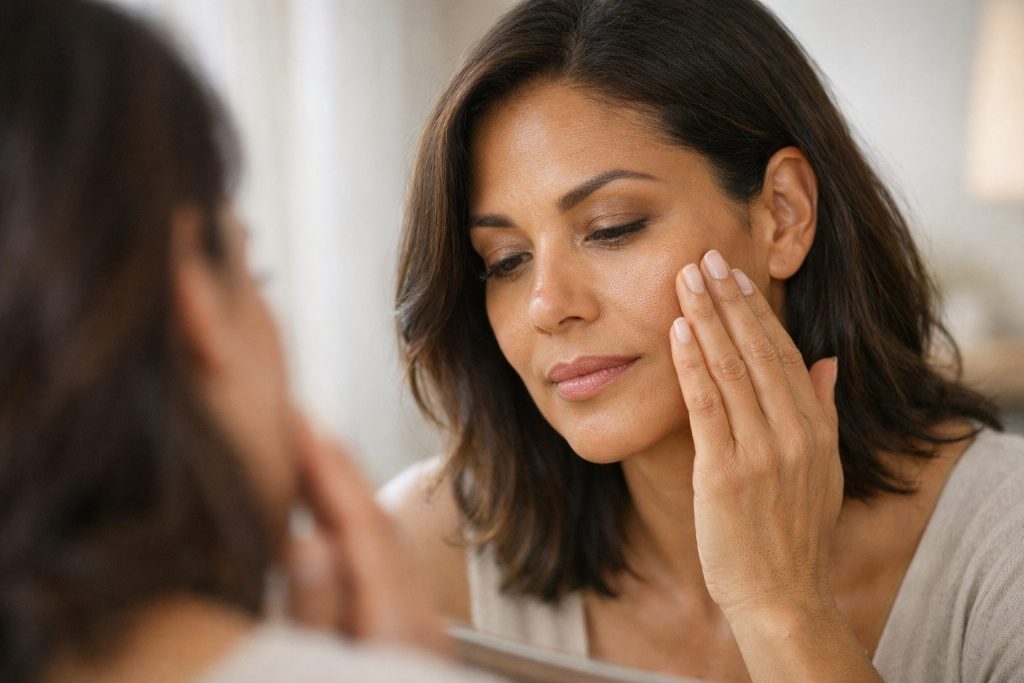

Foundation does not suddenly stop working. It just stops working the way it used to.
At some point, something shifts. The same formula that once blended effortlessly starts sitting on the skin instead of becoming part of it. It settles faster, feels heavier, or draws attention to areas that never stood out before.
The shift is not your skill. It is how the product interacts with your skin now.
Skin changes quietly over time. It holds a little less moisture, moves a little differently, and shows more texture in places that once looked completely smooth. Once you understand that, foundation becomes much easier to rethink. The goal is no longer to cover more. It becomes about choosing formulas, finishes, and techniques that work with your skin instead of against it.
The Moment Foundation Stops Disappearing Into the Skin
There is a point where foundation no longer melts in the way it once did. It may still look good when first applied, but as the day goes on, it becomes more visible. Not in a dramatic way. Just enough to feel slightly off.
This is often the moment women begin looking for the best foundation for mature skin over 40 or exploring options that work better over 50, hoping one product will solve everything instantly. In reality, the real issue is usually not the brand. It is the relationship between the formula and skin that now has more movement, more texture, and often less natural hydration.
What You Usually Notice First
The earliest change is rarely fine lines by themselves. It is the way foundation wears around them.
You may notice more separation near the mouth, more gathering under the eyes, or a finish that fades unevenly across the face. These are not signs that your makeup routine is failing. They are signs that your skin is asking for a different kind of support.
Why More Coverage Often Makes Things Worse
It is tempting to assume that more coverage will smooth everything out. Most of the time, it does the opposite.
Heavier formulas tend to collect in areas that naturally move. They sit more visibly on the surface of the skin and can make texture look sharper instead of softer. Even when the application looks polished at first, the finish often becomes less flattering as the hours pass.
This is where many common foundation mistakes on mature skin start. The instinct is to add more coverage, but the better move is usually to reduce weight and improve placement.
Why Lighter Usually Looks Better
A lighter formula has a better chance of moving with the skin throughout the day. It tends to blend more naturally, settle less obviously, and create a finish that still looks like skin.
This is why lightweight foundation for mature skin often performs better than anything thick or overly structured. It gives you room to build where you need it without coating the entire face in product.
Texture Starts Telling the Whole Story
Once skin changes, texture becomes more important than coverage level.
Two foundations can promise the same result but look completely different on the face. One may soften the appearance of the skin while the other sits on top of it and makes everything more obvious. That difference becomes easier to see in daylight, especially around areas that carry more natural detail.
This is why the right foundation for fine lines and wrinkles is rarely the one that claims to cover the most. It is the one that stays flexible, blends cleanly, and lets the skin still look alive underneath.
The Finish That Makes Skin Look Refined
Finish determines more than most people realize.
Very matte formulas can flatten the face and exaggerate dryness. Overly glossy formulas can slip too quickly and draw attention to movement. The best finish for mature skin foundation usually lives in the middle. Soft, natural, lightly radiant, and controlled.
What Actually Looks Good in Real Life
A natural looking foundation on mature skin should reflect light gently without looking shiny. It should make the face look even, rested, and smoother without turning into obvious makeup. This is why a balanced dewy foundation for mature skin can work beautifully when it has enough structure to stay in place without becoming slick.
The best finish is not flat and it is not wet. It is polished.
Hydration Changes the Entire Outcome
Foundation can only perform as well as the skin beneath it.
As skin becomes drier, product starts to cling in ways it never used to. That can mean rougher texture around the mouth, uneven wear across the forehead, or foundation catching in areas that need softness the most. This is exactly why a hydrating foundation for aging skin matters so much.
When the skin feels balanced, foundation sits more evenly and keeps its finish longer. When the skin is dehydrated, even a good formula struggles.
Where Dryness Tends to Show First
The areas that move most often reveal dryness first. Around the mouth, under the eyes, and between the brows are common places where foundation begins to look less smooth as the day goes on.
A foundation for dry mature skin should not just look good at application. It should still feel comfortable hours later. That comfort is often what separates a flattering formula from one that slowly starts working against you.
Why Foundation Settles Into Lines
This is one of the most common concerns, and one of the easiest to misunderstand.
Foundation settles into lines when too much product is placed in areas that naturally crease, smile, fold, and move. Thicker textures make it more obvious. So do powdery finishes and formulas that dry down too rigidly.
What Actually Helps
If you have ever wondered what foundation does not settle into wrinkles, the answer is not one miracle bottle. It is a smarter combination of formula, finish, and technique.
- Use less product in high-movement areas
- Choose formulas that stay flexible instead of setting too stiffly
- Blend by pressing product into the skin rather than dragging it across the surface
Those small choices do more to prevent foundation from settling into lines than constantly testing heavier products that promise too much.
Cream and Liquid Foundations Do Not Behave the Same
The conversation around cream vs liquid foundation for mature skin can sound more complicated than it really is. Both can work. They just behave differently.
Cream formulas usually feel richer and more cushioning. Liquid formulas tend to feel lighter, easier to spread, and often more breathable. Which one works best depends on how much comfort, hydration, and flexibility your skin needs.
Over time, many women find themselves moving toward lighter liquid or serum-like textures because they are easier to control and less likely to build up. That does not mean cream formulas are wrong. It just means the finish and feel matter more now than they once did.
Application Matters More Than It Used To
At a certain point, technique becomes just as important as the product itself.
The same foundation can look completely different depending on how it is applied. A formula that feels disappointing with one method can suddenly look smooth and natural with another.
What Helps Foundation Look Smooth Again
When women search for how to make foundation look smooth on mature skin, what they are usually trying to solve is not just dryness or texture. They are trying to bring back that seamless effect they used to get automatically.
The biggest difference often comes down to pressure. Pressing foundation into the skin with a sponge or brush creates a more even finish than sweeping it across the face in broad strokes. It helps the product settle where it should instead of collecting where it should not.
Less product, better placement, and softer finishes change everything.
Coverage Still Matters, but It Has to Look Like Skin
Coverage is still important. It just needs a different strategy now.
The best coverage foundation for mature skin should not look dense or obvious. It should make the skin appear calmer and more even while still allowing natural dimension to come through. That is what keeps the face looking fresh instead of flat.
Instead of spreading product evenly across the entire face, it often works better to focus on the areas that need the most balancing and leave the rest lighter. This is also usually what people mean when they ask what type of foundation is best for older women. They are not really asking for maximum coverage. They are asking for coverage that still looks believable.
The Small Adjustments That Quietly Improve Everything
The biggest improvements often come from details that feel almost too simple to matter.
- Using slightly less product than you think you need
- Choosing a finish that softens instead of masks
- Giving extra attention to hydration before makeup
- Building coverage only where the face truly needs it
- Checking the finish in natural light before you leave
These are the anti-aging foundation tips that actually translate into a better result. They do not add complexity. They remove the things that are getting in the way.
What Quietly Pulls the Whole Look Down
Some habits consistently make foundation look worse, even when the rest of the makeup feels right.
- Overly matte formulas that flatten the skin
- Heavy layering that leads to buildup
- Powder-heavy finishing that exaggerates dryness
- Applying the same amount of product everywhere
These are often the reasons foundation that does not crease on mature skin feels so hard to find. The issue is not always the foundation itself. It is often the combination of finish, placement, and expectation.
What Actually Works Now
The role of foundation changes over time. It stops being about covering everything and starts becoming about balance.
Even tone. Soft texture. A finish that looks natural in every light. Enough coverage to calm the skin down, but not so much that it becomes the first thing anyone notices.
Once that shift happens, foundation starts working again in a completely different way. It feels lighter. It looks smoother. It lasts longer because it is no longer fighting the skin it is sitting on.
And that is when makeup starts feeling effortless again.
Frequently Asked Questions
Why Does Foundation Start Looking Different as Skin Matures?
As skin changes, it tends to become slightly drier and more textured, which affects how foundation sits and wears throughout the day. Formulas that once blended seamlessly may start to settle or look more visible because they are no longer interacting with the skin the same way.
What Type of Foundation Looks Most Natural on Mature Skin?
Foundations with a lightweight, flexible texture and a soft, natural finish tend to look the most natural. They allow the skin to move while still evening out tone, rather than sitting heavily on the surface.
Why Does Foundation Settle Into Fine Lines and Wrinkles?
This usually happens when too much product is applied in areas that naturally move or when the formula is too thick or dry. Lighter layers and more flexible formulas help reduce that effect.
How Can You Make Foundation Look Smoother on Mature Skin?
Using less product, focusing on hydration, and pressing foundation into the skin instead of dragging it across can create a smoother, more even finish that lasts longer throughout the day.
Is Liquid or Cream Foundation Better for Mature Skin?
Both can work well, but many people prefer lighter liquid or serum-style foundations because they feel more breathable and are easier to control. The best choice depends on how your skin responds to the texture and finish.